
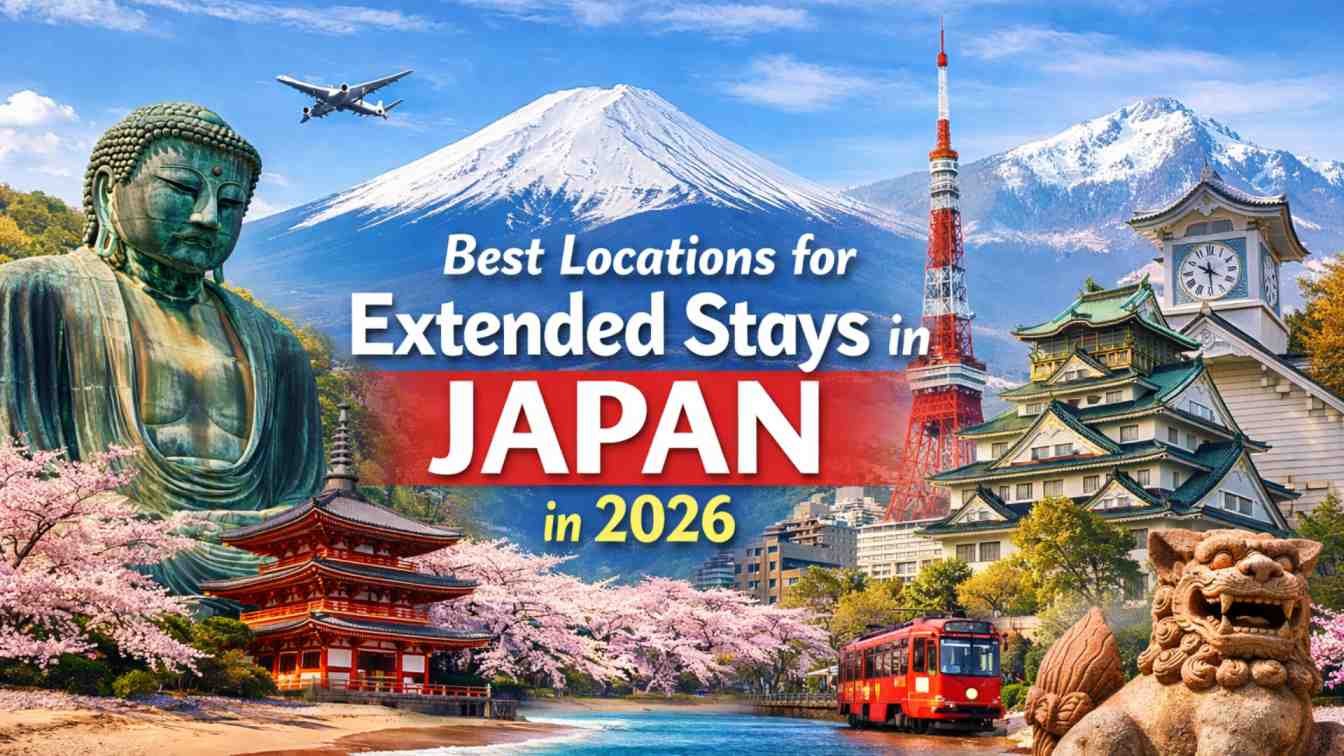
Japan is no longer just a short holiday destination. In 2026, more travelers, digital nomads, students, and long-term visitors are choosing Japan for extended stays—from one month to several years. With improved visa awareness, remote work flexibility, and better living infrastructure, staying longer in Japan has become both practical and rewarding.
If you’re planning to live, work, study, or slow-travel in Japan, choosing the right city is crucial. Factors like cost of living, transport, lifestyle, food, culture, and accommodation options vary widely across regions.
This updated guide explores the Best Locations for Extended Stays in Japan, covering major cities and underrated gems—so you can find the place that truly fits your long-term goals.
Before planning your stay, it’s strongly recommended to read this complete guide on things you need to know before going to Japan and understand travel rules, lifestyle basics, and cultural expectations.
Table of Contents
What Makes the Best Locations for Extended Stays in Japan Ideal for 2026
Japan offers an unmatched blend of modern living and traditional culture. Extended stays allow you to:
- Experience daily Japanese life beyond tourist spots
- Save money compared to short hotel stays
- Learn the language naturally
- Explore nearby cities easily
- Understand Japanese culture deeply
If it’s your first long trip, this first-time visit to Japan guide will help you prepare better.
For Indian travelers, planning is easier with this step-by-step Japan trip planning guide from India.
Kamakura (Kanto)
Kamakura is perfect for those who want a calm, coastal lifestyle close to Tokyo. Located just one hour away from the capital, Kamakura offers temples, beaches, hiking trails, and a relaxed pace of life.
Why Kamakura is ideal for long stays:
- Lower rent than central Tokyo
- Easy access to Tokyo jobs
- Peaceful environment
- Rich historical atmosphere
It’s ideal for remote workers, retirees, and long-term travelers who want balance without isolation.
Kobe (Kansai)
Kobe is a stylish port city known for its international vibe, scenic mountains, and high quality of life. Compared to Osaka and Kyoto, Kobe feels less crowded yet equally modern.
Benefits of staying long-term in Kobe:
- Affordable housing
- Clean, walkable neighborhoods
- Multicultural environment
- Excellent healthcare facilities
Kobe is perfect for families, professionals, and expats who want a relaxed but urban lifestyle.
Fukuoka (Kyushu)
Fukuoka has quickly become one of the top cities for extended stays in Japan. It’s affordable, friendly, and known for its food culture.
Why Fukuoka stands out:
- Lower cost of living
- Short commute times
- Warm climate
- Strong startup and student culture
Food lovers especially enjoy Hakata ramen and fresh seafood. It’s also a great base for exploring Kyushu’s nature and hot springs.
Matsuyama (Shikoku)
Matsuyama is a hidden gem for slow travelers and long-term cultural explorers. Famous for Dogo Onsen and Matsuyama Castle, this city offers authentic Japanese living.
Ideal for:
- Retirees
- Language learners
- Writers and artists
Living here is budget-friendly, peaceful, and deeply traditional—perfect if you want to experience real Japan beyond big cities.
Naha (Okinawa)
If tropical weather and island life attract you, Naha is the best option. Okinawa feels completely different from mainland Japan.
Why choose Naha for long stays:
- Warm climate year-round
- Beach lifestyle
- Unique Ryukyu culture
- Slower pace of life
It’s ideal for digital nomads, long-term vacationers, and wellness-focused travelers.
Sapporo (Hokkaido)
Sapporo is a top choice for those who love cool weather, nature, and space. Known for snow festivals and clean living, it’s great for extended stays.
Advantages of staying in Sapporo:
- Affordable rent
- Wide open spaces
- Excellent food culture
- Less crowd compared to Tokyo
Winters are long but magical, making it ideal for people who enjoy seasonal living.
Nagoya (Chubu)
Nagoya is one of the most underrated cities in Japan for long-term stays. It’s centrally located and well-connected.
Why Nagoya works for extended stays:
- Strong job opportunities
- Lower rent than Tokyo
- Efficient transport
- Easy access to Kyoto, Osaka, and Tokyo
It’s a practical choice for professionals, students, and families.
Tokyo
Tokyo remains the most popular city for extended stays, especially for work, study, and networking.
Why people stay long-term in Tokyo:
- Endless job opportunities
- World-class public transport
- Diverse neighborhoods
- International communities
Although expensive, choosing outer wards can significantly reduce living costs. Tokyo is ideal if you want career growth and global exposure.
Kyoto
Kyoto offers a slow, cultural lifestyle filled with temples, gardens, and traditions.
Best for:
- Cultural learners
- Artists and researchers
- Long-term travelers
Kyoto is quieter than Tokyo and Osaka but still well-connected. Long stays allow you to experience festivals and seasonal beauty deeply.
Osaka
Osaka is friendly, energetic, and food-focused. It’s often preferred by people who want an affordable big-city experience.
Why Osaka is great for long stays:
- Lower rent than Tokyo
- Open and friendly locals
- Incredible street food
- Strong nightlife
Osaka is perfect for students, young professionals, and entrepreneurs.
Read More: Do You Know What N5 Is and How It Works for Japanese Learners?
Important Tips Before Planning an Extended Stay in Japan
Before finalizing your stay, go through these essential guides:
- Travel to Japan complete guide
- Best time to visit Japan
- Japanese cultural etiquette
- Travel tips and language guide
- Shopping in Japan
- Outdoor adventures in Japan
For Indian citizens planning to work long-term, understanding visa costs is essential. Read this detailed guide on Japan work visa cost for Indians.
Final Thoughts: Choosing the Best Location for Extended Stays in Japan
There’s no single “best” city—only the best for you.
- Want career growth? → Tokyo or Nagoya
- Want affordability? → Fukuoka or Osaka
- Want culture and calm? → Kyoto or Matsuyama
- Want nature and weather extremes? → Sapporo or Naha
In 2026, Japan is more welcoming than ever for long-term visitors. With the right planning and location, an extended stay can become one of the most fulfilling experiences of your life.
FAQs
1. Where to stay in Japan long term?
Choosing where to stay long term depends on lifestyle, budget, and purpose. Cities like Tokyo, Osaka, Fukuoka, and Kyoto are considered the Best Locations for Extended Stays in Japan due to good transport, healthcare, and rental options. Smaller cities like Kamakura or Matsuyama are ideal for peaceful living. Before deciding, read this guide on need to know before going to Japan to understand housing rules, contracts, and local expectations for long-term residents.
2. What is the 5 minute rule in Japan?
The 5-minute rule in Japan reflects punctuality and efficiency. Trains, meetings, and services often arrive early rather than late. For long-term residents choosing the Best Locations for Extended Stays in Japan, this rule highlights how daily life works—especially in cities like Tokyo and Nagoya. Understanding such habits is essential for smooth integration. If you’re new to Japan, this first-time visit to Japan guide explains social rules that matter during extended stays.
3. Which part of Japan is best to stay in?
There’s no single best area—it depends on your goals. Tokyo is best for jobs, Osaka for affordability, Fukuoka for relaxed living, and Kyoto for culture. These cities are among the Best Locations for Extended Stays in Japan because they offer housing options, transport, and lifestyle balance. Climate and travel plans also matter, so check the best time to visit Japan before choosing your long-term base.
4. What is the 25 5 rule in Japan?
The 25–5 rule in Japan is commonly used in productivity and work culture. It refers to focusing deeply for 25 minutes followed by a 5-minute break. Many long-term residents notice this mindset in offices and study environments across the Best Locations for Extended Stays in Japan. Understanding such work habits is helpful if you plan to work or study. This travel tips and language guide also explains daily life practices useful for extended stays.
5. Can you extend your stay in Japan?
Yes, you can extend your stay depending on your visa type. Tourist visas usually allow extensions only in special cases, while student, work, or dependent visas are easier to renew. If you’re planning to live in the Best Locations for Extended Stays in Japan, it’s important to understand visa rules early. Indian travelers should especially review this Japan work visa cost for Indians guide before planning a long-term stay.
6. What is the 80% rule in Japan?
The 80% rule in Japan is often linked to productivity and health, encouraging people to stop eating when they feel 80% full. This philosophy influences lifestyle and wellness across many Best Locations for Extended Stays in Japan, especially in places like Okinawa and Kyoto. Long-term residents often appreciate how this mindset supports balanced living. To understand these cultural habits better, read this guide on Japanese cultural etiquette.
7. How to get a long term stay in Japan?
To get a long-term stay in Japan, you need the right visa—such as work, student, dependent, or cultural activity visas. Choosing cities from the Best Locations for Extended Stays in Japan helps because they offer better job access, schools, and housing. Planning documents, accommodation, and finances in advance is crucial. This detailed travel to Japan guide explains entry requirements and long-stay preparation clearly.
8. Is Japan affordable for extended stays?
Japan can be affordable if you choose the right city. While Tokyo is expensive, places like Fukuoka, Osaka, and Nagoya are among the Best Locations for Extended Stays in Japan due to lower rent and daily costs. Long-term rentals, local shopping, and public transport passes reduce expenses significantly. This shopping in Japan guide helps long-term residents manage budgets smartly.
9. Is Japan safe for long-term living?
Japan is one of the safest countries in the world, making it ideal for extended stays. Cities considered the Best Locations for Extended Stays in Japan offer excellent public safety, clean neighborhoods, and reliable transport. Whether you’re living alone or with family, safety is rarely a concern. Outdoor lovers can also explore nature confidently—this outdoor adventures in Japan guide highlights safe activities across regions.
10. Do I need to know Japanese for long-term stay?
Basic Japanese is highly recommended for long-term living. While major cities in the Best Locations for Extended Stays in Japan have English support, daily tasks like renting homes or visiting clinics become easier with language skills. Learning simple phrases improves social connections and comfort. This travel tips and language guide is perfect for beginners planning extended stays.